

STAGE 3: FORMING YOUR LCSC AND CREATING A SHARED VISION AND GOALS
Scheduling LCSC Meetings
Your lead agency will need to coordinate to find a time that works for all involved. For example, although adult professionals may want or expect meetings to be held during business hours, this schedule may not work for young people in school or working. Centering youth and young adults in your LCSC means prioritizing their schedules to fully participate in all meetings.
Vision-Setting Meetings
These initial meetings should work toward a shared vision of what participants want to see for their community. Plan for two meetings of approximately 2 to 3 hours each (or a single meeting of 4 to six hours). Below we have sample agendas for 2 – 3 hour meetings.
Meeting 1: Sample Agenda
- Introductions and opening icebreaker question
Ask participants to share their name, affiliation/position, pronouns, and why they chose to join the group. If time allows, add an icebreaker activity or question, particularly if most participants do not already know each other.
- Discussion question: What does youth homelessness look like in our community?
This activity will highlight the fact that stakeholders see youth homelessness differently. For example, McKinney Vento liaisons are more likely to work with more youth who are “couch surfing.” In contrast, street outreach programs work with more unsheltered youth, and young people may discuss experiences and pathways unknown to group members.
- Discussion question: How should we define youth homelessness?
Encourage participants to use a definition that includes all youth experiencing homelessness in your community. In addition, definitions should consist of characteristics of the youth (e.g., up to age 24) and their experiences (e.g., couch surfing, living in cars).
- Discussion questions: What are the barriers that perpetuate youth homelessness? What works, and what are the challenges?
This conversation should build on the previous one. Encourage participants to go beyond big picture barriers (lack of funding or affordable housing) to think about gaps or shortcomings in the community’s current response to youth homelessness that lead to youth experiencing homelessness repeatedly.
- Discussion question: What are some solutions that could address the gaps and barriers we see?
Meeting facilitators should push participants to go beyond the strategies already being used in the community and towards solutions targeted to the specific systemic gaps or challenges identified in the earlier discussions.
- Discussion question: What would it look like to end youth homelessness in our community?
Participants should brainstorm what an ideal system for addressing youth homelessness would include. After some initial ideas have been shared, consider walking participants through NN4Y’s Proposed System to End Youth and Young Adult Homelessness to see if there are any elements they wish to add or address.
At the end of the first meeting ask participants if everyone who is needed for this ideal system is already in the room. If not, create a list of other people or groups to include in future efforts (e.g., the faith-based community, local colleges, workforce agencies, and local businesses).
Meeting 2: Sample Agenda
Coming out of your first meeting, your group will likely have a long list of issues, barriers, and strategies related to youth homelessness in your community. The goal for your next meeting is to refine the information shared previously and find consensus on:
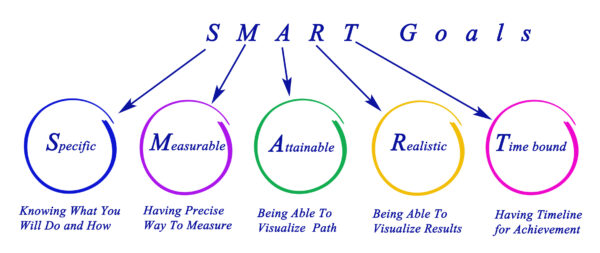
- The LCSC’s SMART goals for the community
- Actions to be taken as a community to overcome the barriers discussed
Consider starting the meeting with the following discussion question, which will get participants back into the mindset of the last meeting:
How would you describe our current youth homelessness/crisis response system?
Ask participants to describe the current system in one word or phrase can help summarize the learnings from earlier meetings and later prime discussions about what needs to be changed to make the system work better for youth.
You can also let participants list multiple descriptors and let them “endorse” other participants’ descriptors (e.g., writing out the suggestions and letting participants place checkmarks or sticky notes on the words that they agree are good descriptions of the current system).
That discussion should lead to starting the process or refining your group’s ultimate goals and planned actions. The group may want to identify a few major areas of concern/work. These could include:
- identification and outreach,
- coordinated entry,
- systemic issues,
- prevention/diversion/shelter,
- cross-system issues,
- disconnected youth, and/or indigenous communities
Then participants can assign each of the issues, goals, and strategies discussed earlier to one of the categories and brainstorm to identify any additional items within each category.
From there, the group should work to narrow down even further to identify the 1-3 SMART goals. For each goal, the group will need to consider whether that strategy is the optimal way of addressing one or more of the barriers identified. This includes thinking about how similar solutions have already been tried, and why those similar responses did or didn’t work in the past. In addition, goals will need to be “reality checked” against the experience of individuals who have experienced homelessness in your community. That will be the focus of the next LCSC meeting but can be previewed in this meeting if time allows.
Post-meeting follow up
After your initial meetings to develop a shared vision and goals, the meeting facilitators should have one-on-one check-ins with the key stakeholders who participated.
- Keep these stakeholder check-ins small, generally, just the person you are checking in with, the LCSC lead/facilitator, and one YAB member (whoever has the closest connection to each stakeholder).
- If the LCSC has a very large number of members, the facilitators will need to decide who to follow up with individually based on whoever they feel will drive the work going forward. In some communities, this could be the youth service providers, in others, it could be city or county government staff, depending on local context, the specific people in each role, etc.
- These follow-up meetings help bolster the stakeholders’ connection to the LCSC and their relationships with the facilitators.
Although the YAB members should be co-facilitating and fully participating in the LCSC meetings about goals, strategies, etc., they will continue to have their meetings and work on their own YAB goals and priorities.
Resources
NN4Y’s “A Systems Approach to Youth and Young Adult Homelessness in America” can serve as a resource during this stage. We know a systems approach to addressing youth and young adult (YYA) homelessness in America is critical. Therefore, we have developed this Proposed System to End Youth and Young Adult Homelessness. This resource provides a practical vision for local planning and collaboration and guides federal policymakers. Learn more.

