
At a time when immigration enforcement actions and policy changes are creating fear and confusion, it is critical that youth homelessness providers—and young people themselves—have access to clear, accurate, and actionable information. The National Network for Youth (NN4Y) is committed to ensuring that young people experiencing homelessness, including undocumented and immigrant youth, know their rights and can access support in moments that matter.
This comprehensive resource hub is designed for youth homelessness providers and young immigrants experiencing homelessness across the country. It includes practical guidance, legal resources, and technology-based tools that can be used in real time.
Youth Experiencing Homelessness: You Have Rights, Regardless of Immigration Status
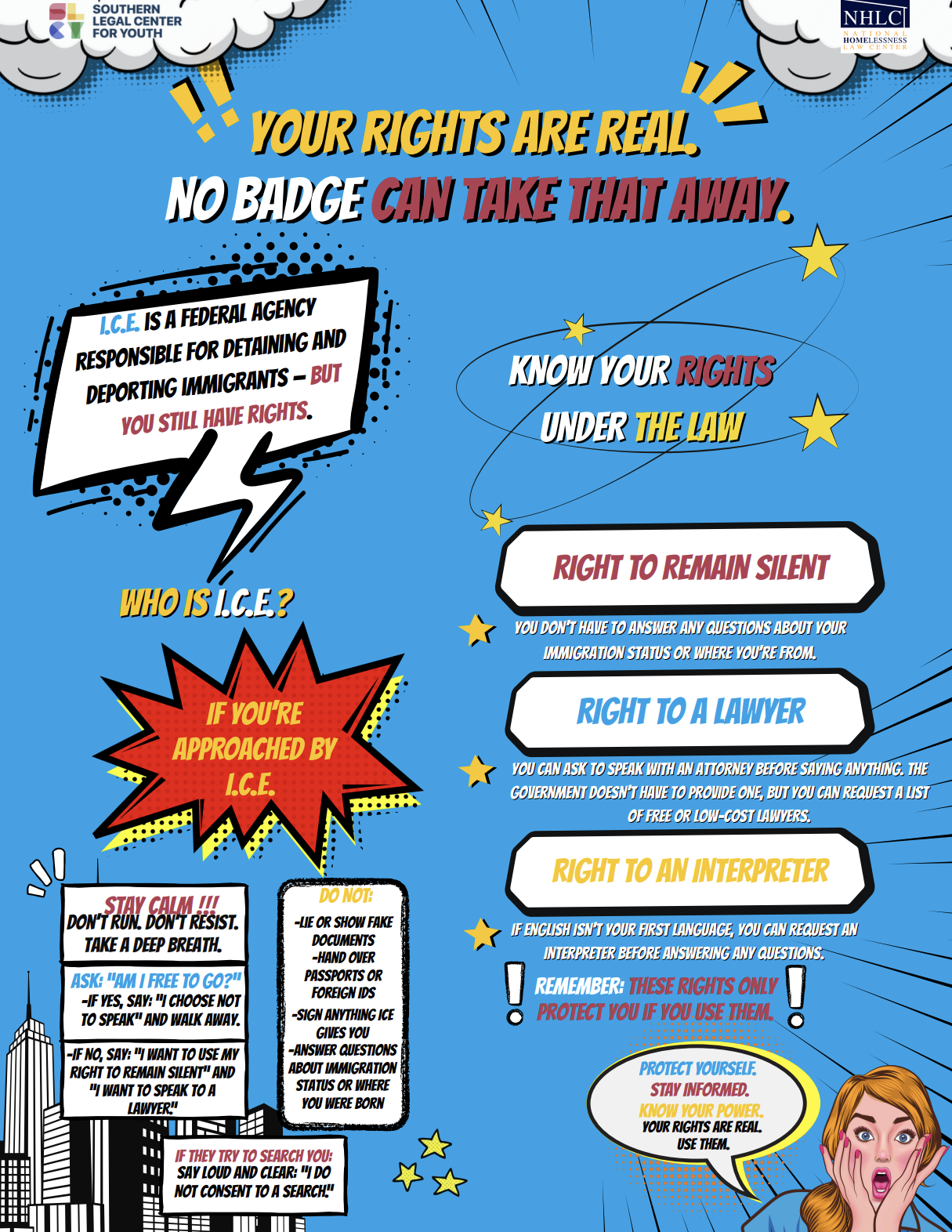
All people in the United States have constitutional rights, regardless of immigration status. These rights apply at home, shelters, work, school, and public spaces. Knowing and asserting your rights can help protect your safety and well-being during interactions with immigration enforcement.
Share the flyer below, created by the Southern Legal Center for Youth and the National Homelessness Law Center, with others who need information about your rights!
If you’re a parent, you should plan ahead by making a safety plan for your child. Guardianship is a legal process that allows a parent to name a trusted adult to care for their child if the parent is detained or unavailable. Guardianship laws vary by state, so look into your state’s laws as part of your family preparedness planning.
Resources For Youth Homelessness Service Providers
Youth homelessness providers, shelters, community-based providers, and employers should know how to respond if immigration enforcement appears at their workplace or program site. The following resources offer clear, legally-grounded guidance.
This guidance clarifies provider rights and responsibilities during immigration enforcement encounters. It addresses client privacy and confidentiality, distinguishes required compliance from voluntary cooperation, and supports providers in developing clear internal policies. More resources from NHLC.
This resource offers practical, scenario‑based guidance for nonprofits and direct service providers, including sample scripts for staff interactions with ICE, guidance on protecting client confidentiality and records, and recommendations for staff training and preparedness.
This guide explains the difference between judicial warrants and administrative ICE warrants and outlines what staff should do if immigration enforcement appears at a workplace. It details employer and employee rights and helps youth providers prepare lawful, protective workplace protocols.
These wallet-size cards explain the constitutional rights someone has during encounters with immigration or law enforcement, including the right to remain silent and to speak with an attorney. They are available in multiple languages.
This guide outlines strategies to assist children of immigrants who may abruptly lose their parents as a result of ICE enforcement. It is designed to reduce risks such as abandonment and human trafficking while equipping educators to safeguard immigrant students’ educational rights amid federal immigration actions.
How Providers Can Take Action Now
Youth homelessness providers play a critical role in protecting young people. NN4Y encourages organizations to:
- Download the Preparation Checklist for Youth Homelessness Providers. Download, print, and review these materials before an enforcement encounter occurs.
- Prepare your staff by sharing resources, developing or updating internal protocols for responding to immigration enforcement, and incorporating Know Your Rights education into programming and case management.
- Help youth download and practice using the free Know Your Rights app from HANA.
- Center the voices and leadership of young people with lived experience, including immigrant youth.
National Network for Youth’s Commitment
NN4Y is committed to partnering with youth, providers, and communities to ensure that no young person is left without information, support, or protection. We will continue to share timely resources and uplift community-based solutions that keep young people safe.
If you are a provider and have additional resources to share please share them with us.

