
With the right systems, policies, and resources, youth, young adult, and young parent family homelessness is preventable.
Every year, millions of youth, young adults, and young parent families experience homelessness because of systemic inequities and the failure of systems intended to support them. Most young people experience homelessness through the intersection of multiple, compounding issues such as family conflict and abuse, poverty and economic instability, lack of affordable housing, exiting systems to homelessness, and pregnancy and parenthood. Preventing homelessness requires addressing the root causes of these issues before a housing crisis occurs. It also means ensuring that young people who do experience homelessness can quickly regain stability and avoid prolonged or repeated episodes of homelessness.
Prevalence of Youth Homelessness
One in 10 young adults ages 18-25 experienced homelessness over a 12-month period.

That’s approximately 3.5 million young adults.
One in 30 youth ages 13-27 experienced homelessness over a 12-month period.

That’s approximately 700,000 youth.
Prevalence of Young Parent Family Homelessness
Nearly 44% of youth ages 18-25 who experience homelessness are parents.

That’s approximately 1.5 million young adults.
Approximately 18% of youth ages 18-25 who experience homelessness are pregnant or parenting.

That’s approximately 126,000 youth.
Youth Homelessness Often Looks Different Than Adult Homelessness
Youth homelessness is widespread but difficult to see because most young people experience a combination of visible and hidden homelessness.
- Moving between the homes of friends, relatives, acquaintances, or strangers.
- Staying temporarily in emergency shelters, transitional housing, hotels, or motels.
- Sleeping outside, in vehicles, or in other places not intended for habitation.
Many young people avoid adult shelters because they fear violence, theft, discrimination, or being separated from their siblings, partners, or pets. Others intentionally remain hidden to avoid involvement with child welfare, law enforcement, or because they have had negative experiences with service or care systems. As a result, the true scale of youth homelessness is frequently underestimated, limiting the attention, funding, and services available to address it.
Prevention and Early Intervention Matters
Experiencing homelessness during adolescence or young adulthood can significantly alter the course of a young person’s life. Investing in prevention and early intervention not only changes the trajectory of individual lives, but it reduces chronic adult homelessness and lowers long-term public costs across healthcare, child welfare, legal systems, and emergency services.
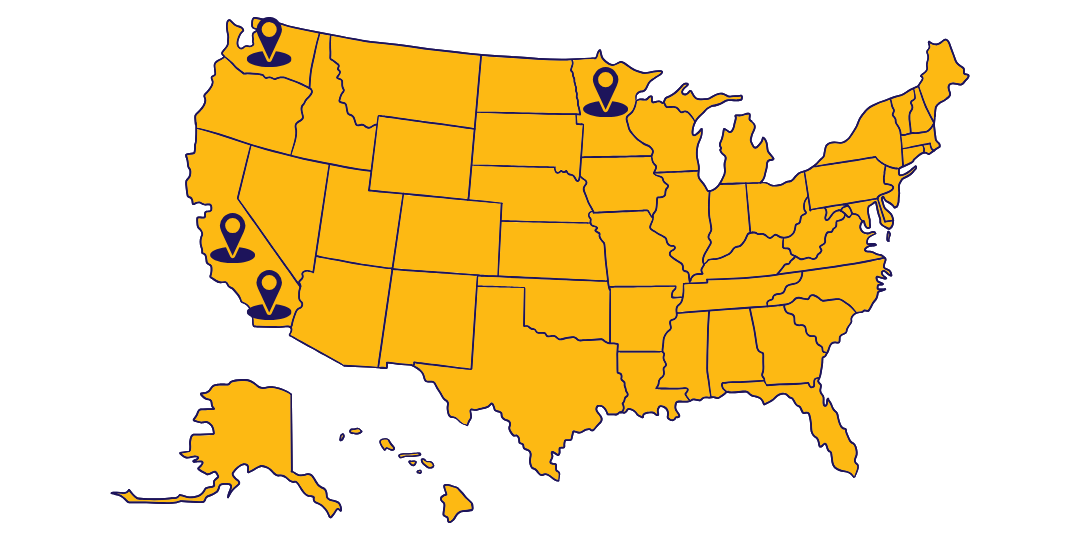
Cities across the country have conducted in-depth surveys of their homeless constituents and have found that many of their chronically homeless adult populations first experienced homelessness as a young person.
- In San Francisco, 49 percent of adults experiencing homelessness first experienced homelessness under the age of 25.
- In Los Angeles, 45 percent of adults experiencing homelessness first experienced homelessness under the age of 25.
- In Seattle, 48 percent of adults experiencing homelessness first experienced homelessness under the age of 25.
- Statewide surveys from Minnesota found that 52 percent of adults experiencing homelessness first experienced homelessness under the age of 24.
Without prevention and early intervention, young people experiencing homelessness are at increased risk of:
- Long-term or chronic adult homelessness.
- Poor physical health, including untreated chronic illnesses and limited access to preventive healthcare.
- Higher rates of depression, anxiety, PTSD, substance use disorders, and suicide.
- Educational disruption, including lower rates of high school graduation and postsecondary education completion. Learn more about the intersection of homelessness and education here.
- Financial instability, including lack of stable employment, and inability to achieve financial independence.
- Involvement with public systems, including child welfare or the criminal legal systems. Learn more about the criminalization of homelessness here.
- Victimization and violence, including assault, robbery, sexual violence, and other forms of exploitation.
- Human trafficking and exploitation. Learn more about the intersection of homelessness and trafficking here.
- Premature death, including a substantially elevated risk of suicide compared with young people who are safely housed.
Prevention is a Continuum
Preventing youth homelessness is not a single intervention, it is a continuum of support that begins long before homelessness occurs and continues until every young person achieves lasting housing stability.
Address the conditions that place young people at risk, including through:
- Reducing poverty by improving economic mobility through equitable opportunities for youth and families.
- Expanding affordable housing options for youth and families.
- Eliminating discriminatory policies and structural barriers that disproportionately affect marginalized youth.
Identify young people at imminent risk of homelessness and intervene, including through:
- Ensuring that young people who are leaving foster care, criminal or juvenile legal systems, behavioral health, or other public systems have safe housing and a comprehensive transition plan.
- Supporting families through strength-based mediation before conflict reaches the point of separation.
- Providing flexible financial assistance to stabilize housing.
- Improving availability of and access to school and community-based supports.
Ensure that young people who experience homelessness return to stable housing quickly, while also preventing future episodes, including through:
- Increasing access to youth-centered housing options and wraparound supportive services.
- Connecting young people to education and employment opportunities. For young parents, ensuring they have access to free or low-cost, high-quality child care to allow parents to attend school or go to work.
- Helping young people remain connected to caring adults whenever possible.
- Improving access to health care, behavioral health care, parenting classes, and other essential services.
Research increasingly shows that youth homelessness can be prevented when communities identify risk early and provide timely, flexible, youth-centered support before a crisis escalates. This support should reflect each young person’s individual circumstances, relationships, strengths, and goals.
NN4Y’s Approach to Prevention
The National Network for Youth believes preventing youth homelessness requires transforming the systems that shape young people’s lives.
We partner with young people with lived expertise, service providers, researchers, advocates, and policymakers to advance federal policies and local cross-system solutions that prevent homelessness before it begins while also improving outcomes for youth at risk of or experiencing homelessness.
Our federal policy work to support prevention efforts includes:
- Advancing legislation to increase access to youth- and young parent-centered emergency and transitional housing, supportive services, and affordable housing.
- Advancing legislation to align federal definitions of homelessness to ensure that children, youth, and families can access secondary and tertiary housing and resources to prevent or intervene early in homelessness.
- Advocating for increased annual funding for systems and programs that impact youth and families, including housing, education, employment, healthcare, and more.
- Partnering with federal agencies to share challenges, barriers, and solutions to improve program implementation.
Our Local Cross-System Collaborative (LCSC) initiative helps communities strengthen the systems and partnerships needed to prevent and respond to youth homelessness, including by:
- Bringing together local and statewide partners, including young people with lived expertise, service providers, public systems, community organizations, and others, to identify gaps, strengthen coordination, and develop sustainable solutions.
- Helping communities examine how young people move across systems such as housing, education, child welfare, healthcare, workforce development, and the legal system in order to address barriers before they contribute to housing instability or homelessness.
- Engaging young people as partners in identifying community priorities, shaping strategies, and informing decisions that affect their lives.
NN4Y provides structured guidance, technical assistance, coaching, and opportunities for shared learning as communities move from planning to implementation. The goal is to build stronger, more coordinated local systems that can identify risk earlier, respond more effectively, and create lasting pathways to housing stability and well-being for young people.

